




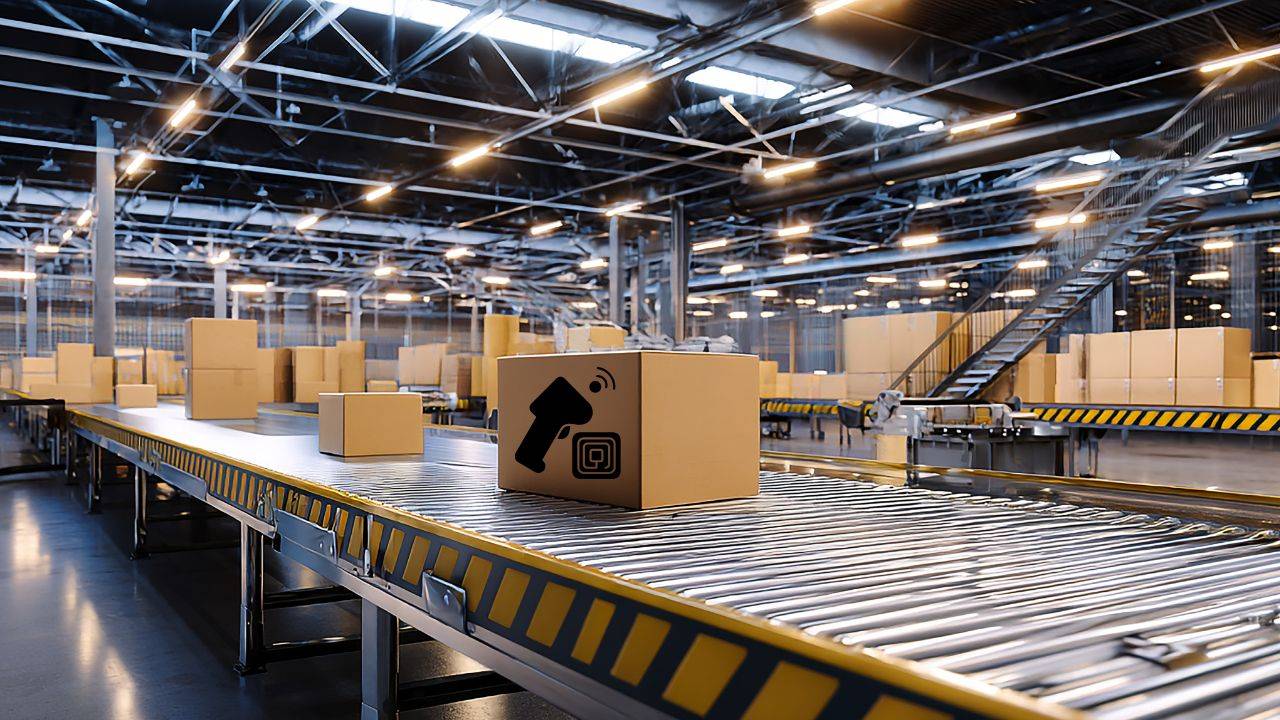
RFID (Radio Frequency Identification) is a technology that enables automatic identification of goods and real-time tracking of their actual flow. MarketsandMarkets forecasts indicate that the global RFID market will grow from $15.8 billion in 2023 to $40.9 billion by 2032. The largest share of this growth is in the logistics and supply chain sector, which is already the biggest adopter of this technology.
How is RFID changing the daily work of a warehouse?
The benefits of using RFID are visible very quickly and directly impact warehouse operations.
Receiving deliveries without bottlenecks
- The pallet or the entire batch of goods is automatically identified upon entering the warehouse.
- no need for manual scanning and additional confirmations in the system
- Shortening admission time and eliminating operational delays
Current location of the goods
- Every movement between zones is automatically recorded.
- faster detection of unplanned shifts
- identification of localization errors and deviations from the process
Zero-downtime inventory
- Inventory verification takes place in the background of daily work
- no need for periodic physical inventory counts
- Discrepancies are detected in real-time, not after the fact.
When is RFID implementation in a warehouse most cost-effective?
Implementing RFID makes real operational sense when manual identification can no longer keep pace with the scale and speed of warehouse operations.
This most often concerns situations where:
- Volumes are growing and there's pressure on delivery times.
- The receiving and picking processes are starting to get longer.
- Manual scanning limits throughput and creates bottlenecks
- discrepancies arise between the physical state and the data in the system
- Real-time data work becomes crucial.
In smaller operations, RFID is implemented in stages, most often starting with receiving deliveries or selected zones where automatic identification yields the quickest results.
How to prepare a warehouse for RFID implementation?
Preparation Warehouse to RFID requires process actions and organizational, not solely technology installation.
For the implementation to be effective, before launching it, you need to:
- Identify bottlenecks in current warehouse processes
- determine which events are to be logged automatically
- Verify data consistency in IT systems
- plan a pilot in a selected warehouse area
In approach RFID intralogistics technology is part of a broader effort to organize warehouse processes.. Every implementation is preceded by an analysis of the actual flow of goods, identification of bottlenecks, and assessment of the quality of operational data. This allows for controlled scaling of operations without loss of data quality and without making performance dependent on manual activities.
Does the implementation of RFID require the entire warehouse to be rebuilt?
Implementing RFID does not require a complete warehouse overhaul if it is done in phases.
Most often:
- technology is implemented in a targeted manner in selected zones or processes
- The solution is gradually scaled with the growth of operations
- RFID infrastructure is adapted to the actual flow of goods
It is crucial to correctly map the physical flow of goods in the designed infrastructure so that automatic identification actually supports warehouse operations.
How quickly can the effects of implementing RFID be noticed?
The first effects of implementing RFID are visible very quickly, often already at the stage of launching the solution in selected processes.
The most noticeable benefits appear in:
- receiving deliveries
- inventory
Automatic identification reduces operation time and limits errors resulting from manual scanning.
Summary: How does RFID impact warehouse efficiency?
- RFID enables real-time data operation
- eliminates bottlenecks in receipt and localization of goods
- allows for inventory without downtime
- implemented in stages does not require the entire warehouse to be rebuilt
- The first effects are visible very quickly
FAQ – Frequently Asked Questions
What are the benefits of implementing RFID in a warehouse?
Enables automatic identification of goods, real-time location tracking, and inventory management.
When is RFID most cost-effective?
As volumes grow, manual scanning creates bottlenecks and current data work is needed.
Does RFID require warehouse reconstruction?
No. The technology is being implemented in stages and at specific points in selected zones.
How quickly are RFID effects visible?
Most often already at the stage of startup in accepting deliveries and inventory.
TAKE A LOOK AT OUR SOCIAL MEDIA: