




Are you wondering whether to modernize your current warehouse or move operations to a larger facility? The answer to this question isn't always obvious. Often, the problem isn't a lack of square footage, but processes that need streamlining. In such situations, a well-planned modernization can significantly increase warehouse throughput without requiring additional expansion or relocation.
There are also situations where further optimizing the current warehouse merely buys time. If a company is growing by 20–30% annually, renting additional space, and operations are spread across several locations, operating costs begin to outweigh the return on investment in new locations. In such a situation, the natural step is to invest in a single large warehouse, which eliminates the costs of dispersion and allows for consistent resource management.
How to increase your warehouse's throughput? We are breaking down this complex issue into its constituent parts together with Łukasz Białek, Technical Director at the company Intralog.
In this article, you will find answers to the following questions:
- How do you know your warehouse has become a bottleneck?
- Is it possible to increase warehouse throughput without expanding it?
- Why does maintaining multiple warehouses stop being profitable for you?
- When is it worth consolidating operations into one warehouse?
- How to avoid costly mistakes when modernizing a warehouse?
When does inventory start to limit business growth?
In practice, the signals are quite clear and repeatable. Operating costs are rising, the number of errors is increasing, and with growing volume, there's pressure for higher throughput. The problem no longer concerns a single process—it starts to encompass the entire operating system. The first visible symptom is usually a specific bottleneck, for example, a lack of pallet spaces or an inefficient shipping zone. In response, companies resort to interim solutions: they rent additional space and relocate part of their operations. This works, but only for a while. Over time, the number of locations grows, and with it comes a new problem: the need to manage the flow of goods between warehouses.
The hidden cost of distraction
While the decision to lease additional space may seem logical at first, further problems arise with scale. When a company operates in multiple locations, it stops managing one warehouse and starts managing an entire distributed system. This creates the need for constant transportation of goods between facilities, their consolidation, and the synchronization of all processes. This is precisely when a new bottleneck emerges. Not in the warehouse, but in the flow between them. Costs increase, operational times lengthen, and managing the entire system becomes increasingly difficult. As a result, instead of increasing efficiency, the organization begins to struggle to maintain control over numerous operations.
Increasing warehouse throughput without expansion – is it possible?
Increasing warehouse throughput without expansion is obviously possible, but only if the limitations result from processes, not from the scale of operations. If the business remains relatively stable, the warehouse has spare space, and the problem lies in the inefficiency of specific areas (such as shipping, picking, or zone layout), an upgrade can yield a very significant effect.
From 2000 packages per day to 2000 per hour - Intralog case study
Example? In one of Intralog's projects, efficiency increased from approximately 2,000 packages per day to 2,000 per hour, without the need for warehouse expansion.
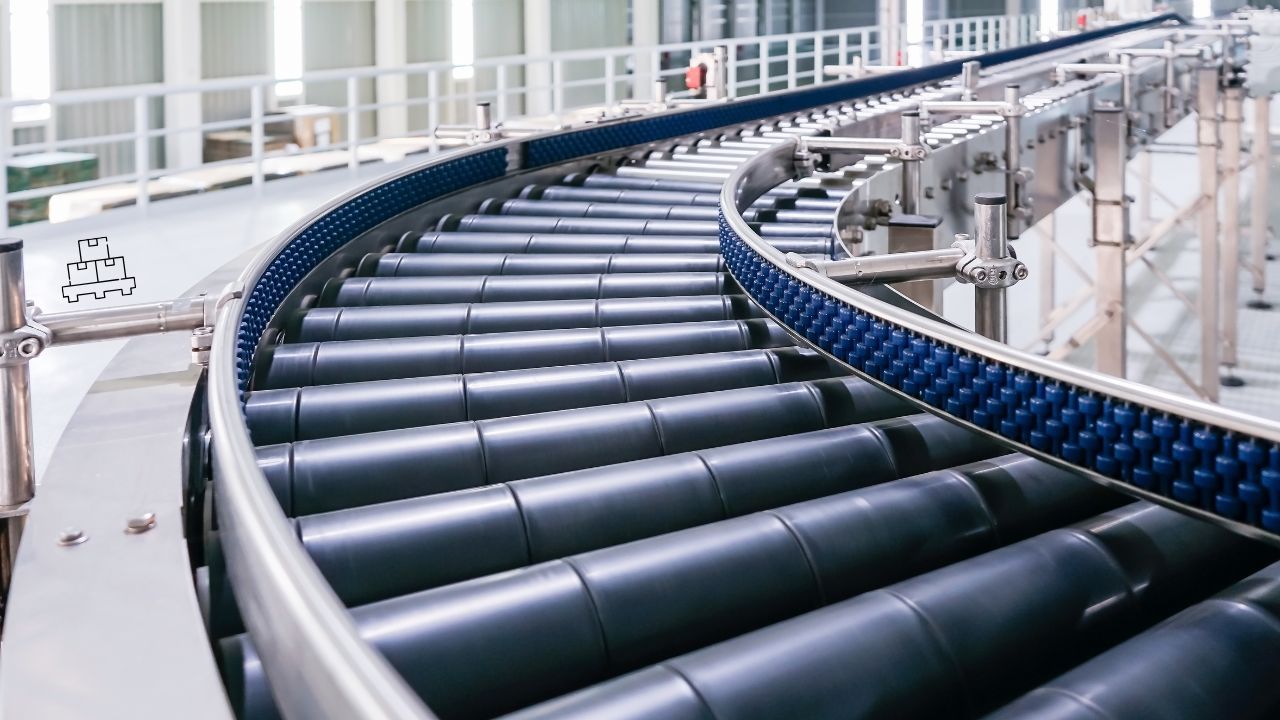
The client operated a warehouse with approximately 60 packing stations, where the final shipping stage was entirely manual. Goods were placed on a conveyor belt and then manually sorted by a team of several people based on labels. This model worked well at lower volumes, but as the volume increased to 10,000–15,000 packages per day, the system became inefficient. Increasing the number of employees did not solve the problem, and The breakthrough was the modernization in the form of an automatic sorter. The results were immediate: daily throughput increased from approximately 2,000 to as many as 48,000 shipments, representing a 23,001% increase in capacity and the complete elimination of errors.
You can read more about this case study here.
Does modernizing a warehouse require significant financial investment?
Not every modernization involves large investment outlays. In many cases, significant improvement can be achieved through simple solutions. Examples include telescopic conveyors during container unloading, which speeds up cargo handling without interfering with building infrastructure. It also works similarly partial automation of selected zones. Automatic acceptance and sorting reduce manual labor, stacker cranes improve storage, and autonomous robots provide support.
Warehouse modernization – the first step, but not the last
Modernization is the fastest way to regain control over operations and increase throughput without changing locations. In many cases, it allows you to streamline processes, eliminate bottlenecks, and prepare the warehouse for the next phase of growth. However, it’s worth stating clearly: with growth rates of 20–30% annually, this is usually a temporary solution. Modernization buys time and improves efficiency, but it doesn’t replace the decision to scale up in the long term.
A lot depends on the business model. 3PL operators adapt warehouses to contracted volume and contract lifespan, so modernization is incorporated into a specific timeframe for them. In contrast, companies operating with their own products, like Wittchen, are more likely to develop existing infrastructure gradually. Regardless of the model, with growing scale, modernization is a stage, not an end in itself.
Planning a warehouse modernization? Think ahead.
Many companies already plan for a warehouse change within a few years at the modernization stage. It is crucial to design systems that can relocate, expand, and adapt to a new location. This signifies a move away from „quick fixes” towards modular infrastructure. Transport or sorting systems can be dismantled, reconfigured, and scaled as the business grows. This way, your investment today doesn't lose value when the warehouse changes, but rather becomes the foundation for the next stage of development.
Are you planning a warehouse expansion and want to do it wisely? Contact us.