




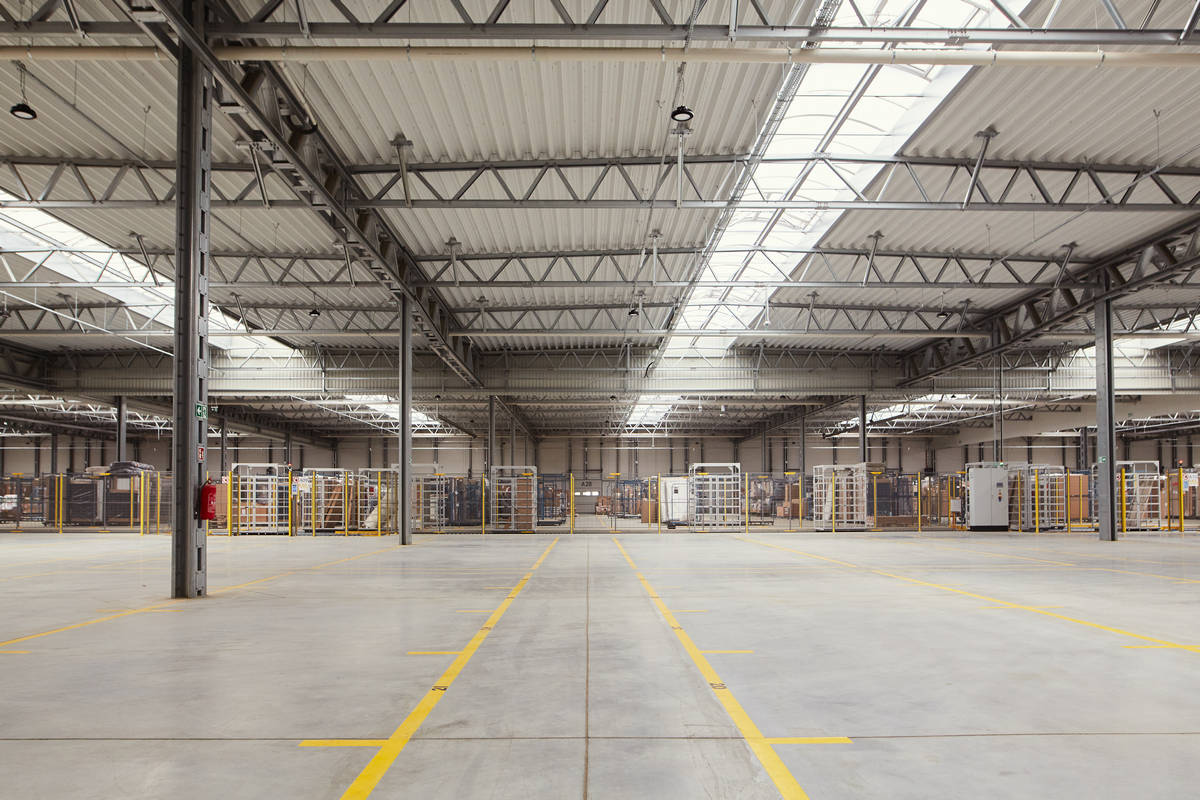
Effective warehouse management starts with a well-planned space. In this post, we present to you 5 rules for effective zoning in a warehouse. These are tips that come from our experience working with companies representing a variety of industries.
Rule 1: Designate zones according to your needs, not according to a scheme
Acceptance, storage, completion and shipping – is the absolute basis. However, every The warehouse has an individual work rhythm. Some need a larger reception area because they handle dozens of deliveries per day, and still others need extra space for returns or complaints.
Rule 2: Aim high and optimize the space
Multilevel shelving, warehouse stacker cranes whether AS/RS systems allow you to accommodate more while maintaining smooth access to goods. Horizontally, on the other hand, the ABC principle works best. It consists in arranging products in such a way that access to them is proportional to the frequency of picking up a given commodity:
- A – this is the merchandise with the highest turnover, so it should be located closest to the picking and shipping zones to reduce transport time;
- B – are medium-rotation products that can be placed a bit further away;
- C – these are articles with the lowest turnover that can successfully occupy less accessible places in the warehouse.
Rule 3: Eliminate any intersecting routes
None of us likes traffic jams and downtime, right? That's why we recommend:
- Designate clear traffic routes.
- Limit the places where the movement of people and machines collide with each other.
- if necessary, use technological support in the form of accumulation conveyors, switch roller or AGV.
By doing so, you give the green light to the efficiency of your warehouse.
Rule 4: Ensure safety and comfort at work
Clear signage, lighting or ergonomics of workstations are elements that determine not only safety, but also productivity. How to take care of it in the various zones?
- Reception area should have designated passageways for carts and pedestrians, as well as adequate lighting.
- In the storage area Racks should be stable and aisles wide enough to avoid collisions. A well-designed signage system helps locate goods instantly without unnecessary movement.
- Picking area - Ergonomics is extremely important in this area. High-rotation products should be placed at eye level or within arm's reach to reduce bending or heavy lifting. This reduces fatigue and the risk of injury.
- Shipping zone this is the last moment to avoid mistakes. Clear marking of ramps, legible divisions for loading lines, and quality control make the entire Shipping process proceeds more smoothly.
Rule 5: Always be flexible when planning zones
Every warehouse is a living organism. A system that works flawlessly today may become a source of delays and additional costs a year from now.
Regularly ask yourself the following questions:
- Do the current zones actually support the processes, or do they slow them down?
- Where do bottlenecks arise and what are their causes ?
- What market, seasonal or regulatory changes might force a reorganization of my space in the coming months?
- What would we have to change if the number of orders suddenly increased or decreased by 30%?
An efficient warehouse should consist of zones that can be successfully developed.
TAKE A LOOK AT OUR SOCIAL MEDIA: